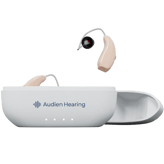
Nano First Ear Plus BTE Reviews: See Why 0 Shoppers Rated It 0 Stars!
We went deep into the Nano First Ear Plus BTE reviews. 0 real-world insights from Nano Hearing Aids hearing aids users explain why it scored 0/5 — or didn’t.
 Supermod
 Moderator
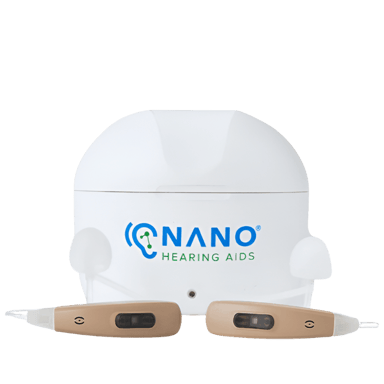 Recaptor
Nano First Ear Plus BTE Hearing Aids Review: Affordable Solutions for Mild to Moderate Hearing Loss
For those navigating the challenges of mild to moderate hearing loss, the hearing aid market offers varied technology and price points. The Nano First Ear Plus BTE stands out as an approachable Behind-the-Ear (BTE) option released in 2024. Designed specifically for adults, these hearing aids prioritize essential functionality paired with a rechargeable battery, aiming to deliver reliable hearing support without astronomical costs. On paper, its specifications emphasize simplicity and comfort, making it a noteworthy contender for users seeking straightforward hearing amplification in North America.
Detailed Specs & Features
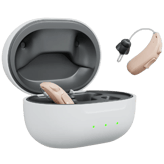
Based on its engineering data, the Nano First Ear Plus BTE utilizes a Behind-the-Ear design optimized for mild to moderate hearing loss. The hearing aids are equipped with rechargeable Lithium-Ion batteries that provide a commendable 20 hours of battery life per charge, ensuring all-day usability. Charging takes approximately 3.5 hours via USB-C ports, with a magnetic charger type included for ease of use, though it lacks fast and wireless charging technologies.
Audio-wise, the device covers a frequency range of 250-5000 Hz, sufficient for speech comprehension, and offers a maximum output and peak gain of 117 dB SPL and 30 dB, respectively. This configuration aligns well with its role in assisting users with mild to moderate hearing difficulties. The digital sound processing supports feedback suppression and sound compression to manage audio clarity, while two program presets help users toggle between different sound environments.
Although it lacks advanced features like directional microphones and adaptive gain control, the product adheres to the basic audio enhancement requirements for its category. On the comfort front, the hearing aids use a behind-the-ear wearing style, with options for various dome types and sizes, made from silicone for comfort and durability. Ergonomic design and discreet fit considerations also factor into its build, and compatibility with glasses and masks is guaranteed, enhancing daily wearability.
User Experience & Performance (Based on Specs)
Design & Build
In daily use, the Nano First Ear Plus emphasizes ergonomics and practical design over flashy extras. The hearing aid's dimensions, 0.34 inches in width, 1.41 inches in depth, and 0.56 inches in height, reflect a compact device that weighs only 0.0069 lbs. This lightness and the inclusion of thin tubes and multiple dome sizes suggest that wearers will experience a comfortable fit. Its ergonomic design and discreet appearance facilitate all-day wear without noticeable bulk, which is crucial for user adherence.
Performance
What makes this hearing aid notable is its straightforward audio profile, with digital feedback suppression and an output limiter to prevent sound distortion. The absence of advanced noise management or directional microphones limits performance in noisy environments, yet its emphasis on speech enhancement aims to improve clarity in everyday conversations.
The inclusion of two preset programs allows users to quickly adjust to different acoustic settings, although the lack of automatic program switching requires manual intervention. Battery performance is another strong point here. Thanks to its power save mode and low power shutoff features, the device manages energy efficiently, extending its 20-hour run time relative to typical rechargeable hearing aids in its price range. However, there is no battery health indicator, so users must track charging habits independently.
Audio Quality
The hearing aid provides a maximum sound pressure level of 117 dB and an equivalent input noise of 18 dB, which means it delivers clear amplification without excessive background noise. A total harmonic distortion of 3% is respectable for this price bracket, keeping audio natural but not pristine. The digital sound processing system favors speech enhancement, underscoring its main objective: helping wearers understand conversations better. On the flip side, it lacks advanced adaptive features or binaural processing, which could have enhanced spatial awareness and sound focusing in complex environments.
Extra Features
The device keeps extras minimal: volume control is managed via buttons, and voice alerts provide basic auditory cues for status changes. Two program modes offer limited but useful customization. Also impressive is the inclusion of an LED indicator and audio alerts for low battery and program changes, augmenting user awareness and device usability. Unfortunately, there is no wireless connectivity, Bluetooth, or remote control functions, which limits smart device integration and convenience.
Pros & Cons
Pros
- Long battery life of 20 hours with convenient USB-C magnetic charging
- Comfortable ergonomic design with multiple dome sizes and good compatibility with glasses and masks
- Digital feedback suppression and speech enhancement improve clarity in typical environments
Cons
- Lacks advanced features such as Bluetooth, directional microphones, and automatic program switching
- No replaceable battery or battery health indicator, which could affect long-term maintenance
Price & Value for Money
With a price of just $75 at NanoHearingAids.com, this device competes strongly in entry-level hearing aids. Given its 1-year warranty and robust battery performance, the pricing feels justified for individuals seeking basic amplification without complex smart features. While it may not suffice for those who want seamless wireless integration or extensive sound customization, it certainly fills a niche for budget-conscious users prioritizing essential amplification and comfort.
Quick Take
In short, the Nano First Ear Plus BTE delivers solid core performance tailored for mild to moderate hearing loss, anchored by its long-lasting rechargeable batteries and straightforward digital processing. If we look at the numbers alone, it's a combination of effective sound enhancement and ergonomic design at an affordable price that makes it a practical choice for many adults new to hearing aids.
Closing Recommendation
This model may be ideal for users who want a simple, reliable hearing aid with a strong battery life and basic digital sound management, primarily for everyday environments. It appears to perform best for those not requiring advanced wireless features or multiple complex sound programs. By focusing on comfort and clarity, it helps users achieve better speech understanding without complexity, making it a pragmatic, data-supported choice in its segment.
Verdict
Rating: Based on the specifications and overall feature set, we believe Nano First Ear Plus BTE deserves 3.8 out of 5.
- Winner Feature => Exceptional battery life and ergonomic design that enhance user comfort and dependability.
- Needs Improvement => The absence of Bluetooth connectivity and advanced sound processing limits versatility in noisy or complex listening environments.
Reviews 0
The good, the bad, and the brutally honest.Average Rating

More Hearing Aids 316
Unlock more awesome finds.